
Sep
Industry Insight
Spotify’s Loud & Clear: Indian Music’s Growing Reach Signals A Shifting Industry
Mumbai, 4th September 2026: India’s music industry is undergoing a remarkable transformation, and the latest data from Spotify’s Loud & Clear report shows just how significant that shift has become. Royalties generated by Indian artists on Spotify grew 29% year-on-year in 2025, with growth coming from virtually every major Indian language and from artists working across an increasingly diverse range of genres. Telugu music emerged as one of the biggest success stories, with royalties increasing by more than 120%, while Marathi rose nearly 50%, Bengali nearly 40%, Malayalam more than 30%, Hindi nearly 30% and Tamil 20%. The numbers point to something much larger than a streaming boom: India’s linguistic diversity is increasingly becoming an economic force, giving artists from different regions the opportunity to reach listeners, generate income and build sustainable careers beyond traditional music-industry centres.
Indian Artists Generated Nearly 335 Billion Spotify Streams in 2025
The scale of consumption behind this growth is equally striking. In 2025, listeners around the world discovered an Indian artist they had never previously heard 12.8 billion times, marking a 14% increase over the previous year. That discovery did not stop at a first listen. Indian artists accumulated nearly 335 billion streams on Spotify, representing more than 20 billion hours of music consumed by listeners during the year. For an industry increasingly built around digital discovery, these figures show that Indian music is not merely being sampled by international audiences; listeners are spending substantial amounts of time with it. Spotify’s data also indicates that the financial benefits are spreading across the artist ecosystem. The number of artists generating more than ₹1 crore annually grew 21% year-on-year, while the number earning more than ₹5 crore has more than doubled since 2023.
Regional Language Music Is Becoming a Major Economic Engine
Perhaps the most important takeaway from the report is the extraordinary growth of regional-language music. Telugu royalties generated globally on Spotify increased by more than 120% year-on-year, putting the language at the forefront of the expansion. Marathi royalties climbed nearly 50%, Bengali nearly 40%, Malayalam more than 30%, Hindi nearly 30% and Tamil 20%. Haryanvi has also experienced a dramatic rise, with streams growing almost seven times between February 2023 and February 2026. Nearly 100 Haryanvi acts are now among Spotify India’s top 5,000 artists. This growth suggests that audiences for regional music were never necessarily absent; rather, digital platforms are making it easier for those audiences to find music that reflects their language and cultural identity, while simultaneously allowing artists to monetise that attention at a scale that was previously difficult to achieve.
The expansion of Spotify’s RADAR programme into Malayalam, following its presence in Punjabi and Tamil, further reflects this changing landscape. The platform’s own framing is that languages once considered limited in their commercial reach can now find audiences well beyond their traditional markets. The report highlights examples such as Banjaare, two brothers from a village in Haryana who reached No. 1 on a global chart, and Aksomaniac, a 22-year-old artist from Thiruvananthapuram who also broke onto a global chart. These examples illustrate the potential of streaming infrastructure to connect artists from smaller cities and communities with audiences that traditional industry structures may not have reached as easily.
RADAR India:
Independent Artists Are No Longer Playing Second Fiddle to Film Music
Another major shift is taking place in the relationship between independent music and Bollywood film music. According to the report, Indian artists accounted for 90% of the tracks on Spotify India’s Daily Top 50 in 2025. Even more significantly, music released outside film soundtracks, described in the report as I-Pop or popular Indian music, accounted for half of Spotify India’s year-end Top 10. Aditya Rikhari, Kushagra, Anuv Jain, Faheem Abdullah and Jasleen Royal were among the artists whose songs appeared alongside some of the country’s biggest film soundtracks. Rikhari’s independent track Sahiba became a standout example, spending more than 11 consecutive weeks at No. 1 on Spotify India.
Speaking about his journey, artist Aditya Rikhari said, “Streaming changed the scale of what was possible for me as an independent artist. Songs that started from a very personal place were able to travel to listeners across the country, sometimes long after they were released. Spotify’s discovery tools, in particular, helped my music reach a much wider set of listeners, many of whom went on to genuinely connect with and love the songs. I believe the ecosystem will only keep evolving for the better for people who are trying to build careers as musicians in India, especially with partners like Spotify supporting that journey. So to every fan of mine who aspires to become a musician – just put your music out. You never know where it might travel.”
Top 50 – India:
The rise of independent music is also reflected in the artists whose songs are travelling furthest outside India. On Spotify’s 2025 Global Impact List, 11 of the top 15 most-exported Indian tracks were artist-first releases. The list included music from AP Dhillon, Karan Aujla, Hanumankind, Anuv Jain and Kushagra, spanning different languages and genres. This is an important development because it challenges the long-standing assumption that an Indian song needs a major film, established label or mainstream celebrity attached to it before it can become a global success. Increasingly, the artist and the song itself can become the centre of the discovery journey.
Dhruvank Vaidya, Head of Music & Podcast, Spotify India, said, “In 2025, 14% more listeners globally discovered an Indian artist on Spotify for the first time – and the listening went deep. Indian artists accumulated nearly 335 billion streams on the platform last year, over 20 billion hours of music, with royalties up 29% and growing in every major Indian language. Telugu alone is up over 120% year on year.”
Spotify Discovery Is Changing the Journey for Independent Musicians
Aditya Rikhari’s experience offers a useful window into how the streaming ecosystem is changing the career path for independent musicians. According to the artist, streaming expanded the scale at which his music could travel, allowing songs that originated from deeply personal experiences to find listeners across India, including audiences who discovered the music long after its release. He specifically credited Spotify’s discovery tools with helping his music reach a wider audience and enabling listeners to develop a deeper connection with his work. His message to aspiring musicians was simple: put the music out because there is no telling where it might travel.
Indie India:
That direct connection between artist and audience is also changing the economics of music. Independent artists can now release music, build a following, receive streaming data and gradually expand into new territories without necessarily waiting for a traditional gatekeeper to validate their work. The growth in artists earning at higher income levels reinforces the idea that the streaming economy is becoming broader rather than being limited exclusively to a small group of superstar acts. While streaming alone does not guarantee a sustainable career, Spotify’s figures indicate that an increasing number of Indian artists are finding meaningful economic opportunities through the platform.
Independent Artists Are Also Influencing Film Music
The boundary between independent music and mainstream film music is becoming increasingly fluid. Spotify’s report points to Dhurandhar, described as one of the biggest film albums of 2025, as an example of independent artists making an impact within major cinematic projects. Artists including Jasmine Sandlas and Simran Choudhary featured on the soundtrack, demonstrating how musicians who establish their own identities outside traditional film structures can increasingly move into large-scale movie projects.
For Simran Choudhary, the change is particularly meaningful for Punjabi music and independent female artists. She noted that streaming has altered what it means to be a Punjabi artist by reducing dependence on traditional industry gatekeepers and enabling artists to build direct relationships with audiences. Her experience with independent music as well as film songs such as Lutt Le Gaya illustrates how an artist can now move between independent releases and mainstream projects while maintaining a direct connection with listeners.
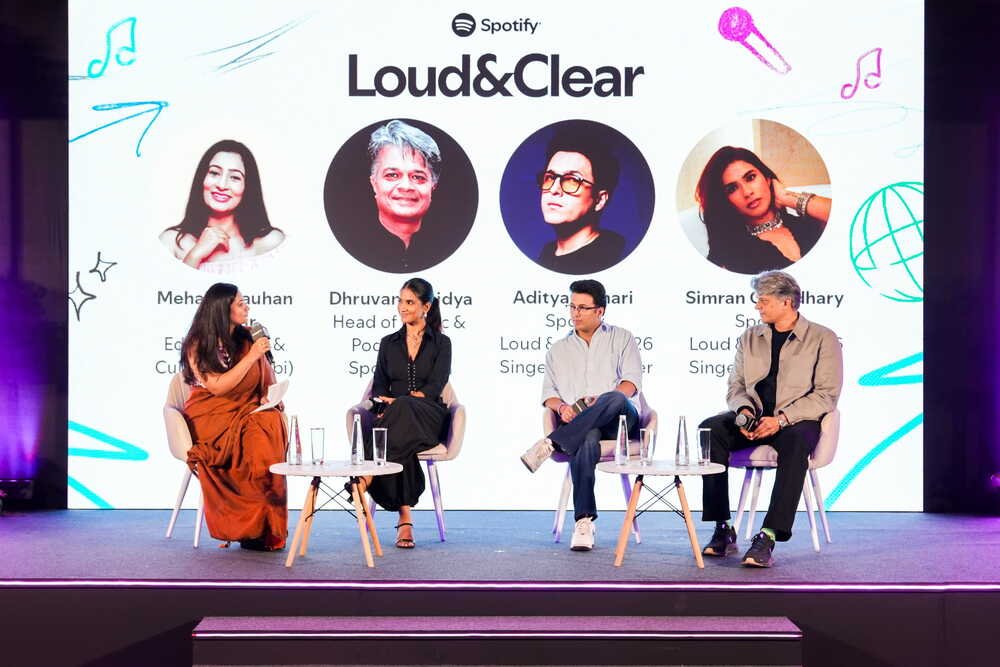
Reflecting on the shift, artist Simran Choudhary said, “Streaming has completely changed what it means to be a Punjabi artist today. You no longer have to wait for a big label or a traditional industry gatekeeper to take your music to the world. I’ve experienced that first-hand with my own independent music and film songs like Lutt Le Gaya. What excites me most is that audiences are now discovering the artist behind the song, not just the song itself. For an independent female artist like me, that ability to build a direct relationship with listeners has been incredibly empowering.”
More Than 40% of Indian Artists’ Spotify Royalties Came From Overseas
The international dimension of India’s music boom may be the most powerful signal of all. More than 40% of the royalties earned by Indian artists on Spotify in 2025 came from listeners outside India. Crucially, that international revenue was not concentrated exclusively around Hindi music. Indian artists are exporting music across multiple languages, with editorial playlists, algorithmic discovery and programmes such as RADAR helping connect regional sounds with audiences in other markets.
Top 50 – Global:
Punjabi music is perhaps the clearest example of this transformation. What was once largely viewed through a regional lens has become a global cultural force, with Punjabi artists increasingly charting internationally and performing for audiences across continents. Spotify’s Radar Global programme has also featured emerging Punjabi artists including Tegi Pannu and Watan Sahi, highlighting the growing international appetite for new talent from the region.
Tamil Music, Hanumankind and the New Global Indian Sound
The report also highlights several examples demonstrating how music rooted in Indian languages and identities can achieve extraordinary international reach. Anirudh Ravichander’s Coolie album, a Tamil-language release, crossed 100 million Spotify streams within just 10 days and received a Times Square billboard feature through Spotify. Meanwhile, Sai Abhyankar and Sai Smriti’s Tamil single “Aasa Kooda” reached 238 million Spotify streams. Hanumankind, the Kerala-born global rapper, crossed 360 million Spotify streams with “Big Dawgs” and reached No. 1 on a Spotify global chart.
Together, these examples challenge the idea that Indian music needs to become linguistically or culturally neutral before it can travel internationally. Instead, the strongest export stories highlighted in the report are often rooted in the artists’ own identities and languages. The global audience is increasingly discovering Indian music on its own terms, whether that means Punjabi, Tamil, Haryanvi, Malayalam or music that blends multiple cultural and genre influences.
Women Artists Are Becoming a Bigger Part of India’s Global Music Story
Women artists are also playing an increasingly visible role in this transformation. Spotify reports that local streams of Indian female artists increased 27% year-on-year in 2025, while international streams grew 7%. Jasmine Sandlas provides one of the report’s strongest examples: her appearances on the Dhurandhar soundtrack helped propel her to No. 3 on the Spotify Global Top 200. She also released Legal Robbery, her first full-length album in more than five years, through her own label, Jasmine Sandlas Records, in October 2025.
Spotify says programmes including EQUAL and RADAR continue to support women artists across languages, genres and different stages of their careers. The broader trend is significant because the streaming ecosystem can provide artists with a direct route to audiences while allowing them to develop careers around their own releases and identities rather than being defined solely by film appearances or label structures.
EQUAL India:
Fans Are Becoming the New Music Discovery Engine
Perhaps the most overlooked element of the report is the role played by listeners themselves. In 2025, Indian artists appeared on 112 million user-created playlists globally, including nearly 59 million playlists within India. These playlists represent more than passive listening: they are a form of audience-driven discovery in which fans actively curate, share and recommend music to their own communities.
This creates an important feedback loop for artists. A listener discovers a song, adds it to a playlist, shares it with friends, and potentially introduces the artist to an entirely new audience. That discovery can then lead to more streams, greater visibility, additional playlist placements and opportunities in other markets. In this sense, streaming platforms provide the infrastructure, but listeners remain a crucial part of the machinery that allows songs to travel.
India’s Linguistic Diversity Is Becoming Its Global Music Advantage
The central message emerging from Spotify’s 2025 data is that India’s music economy is becoming broader, more multilingual and increasingly artist-led. The 29% growth in royalties is significant on its own, but the distribution of that growth is arguably even more important. Telugu’s 120%-plus surge, the rapid rise of Haryanvi, the growth of Marathi, Bengali, Malayalam and Tamil, and the continued strength of Hindi and Punjabi all demonstrate that India’s music market cannot be understood through a single-language lens.
Trending Now – Telugu:
The report also arrives at a moment when the global perception of Indian music is changing. Indian artists are not simply exporting Bollywood songs or established mainstream sounds. They are increasingly exporting their own voices, regional identities and independent creative visions. More than 40% of royalties coming from international listeners, 11 of the 15 most-exported tracks being independent artist-first releases, and billions of streams generated by artists across languages collectively point towards a new model of Indian music discovery.
What the Spotify Numbers Mean for the Future of Indian Music
Spotify’s Loud & Clear data suggests that the next phase of India’s music industry could be defined by accessibility. Artists from smaller cities can potentially reach international audiences without relocating to Mumbai or another traditional industry centre. Regional-language musicians can build communities around their own cultural identities. Independent artists can develop audiences before entering film music or larger commercial projects. And listeners can play an increasingly active role in determining which songs and artists travel.
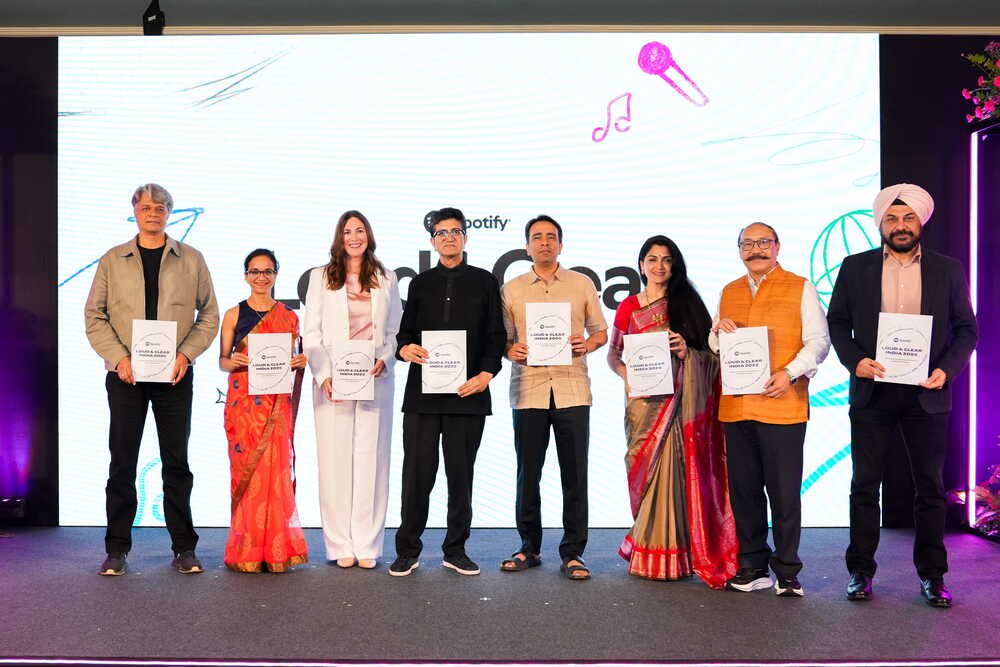
Speaking at the Loud & Clear India event in New Delhi, Minister of State (Independent Charge), Ministry of Skill Development and Entrepreneurship, Jayant Chaudhary described India’s linguistic diversity as not only a cultural strength but an increasingly important economic strength and part of the country’s global identity. He also emphasised the importance of skills, digital capabilities and entrepreneurial opportunities that can help young creators turn talent into meaningful careers.
Jayant Chaudhary, Minister of State (Independent Charge), Ministry of Skill Development and Entrepreneurship, who was a guest at the Loud & Clear India event in New Delhi, said, “India’s music economy reflects the extraordinary creativity, diversity and entrepreneurial spirit of our artists. The 29% growth in Spotify royalties, supported by strong gains across Indian languages, shows how digital platforms are enabling talent from every region to find audiences, build sustainable livelihoods and participate in the global creative economy. It is particularly encouraging to see independent artists succeeding on their own terms and taking music rooted in their languages and identities to listeners around the world. As technology reshapes the creative industries, we must continue to strengthen the skills, digital capabilities and enterprise opportunities that enable young creators to convert their talent into meaningful careers. India’s linguistic diversity is not merely our cultural strength; it is increasingly becoming an economic strength and a powerful part of our global identity.”
For the Indian music industry, therefore, the most important number may not be the 29% royalty increase by itself. It is what sits behind that figure: 12.8 billion first-time global discoveries, nearly 335 billion streams, more than 20 billion hours of listening, rapidly growing regional-language revenues, rising independent artists and an international audience increasingly willing to listen to Indian music in its original form. The next chapter of India’s music story may not belong to one language, one genre or one industry. It may belong to a much larger, more diverse ecosystem where artists can build careers on their own terms, and where music made in India’s many languages can travel anywhere in the world.
Article by Vishwa Deepak Dikshit
