
Oct
Editor's Pick
From Playlist To The Student Protest Site: 8 Moments That Changed The Music Industry’s Digital Playbook In India
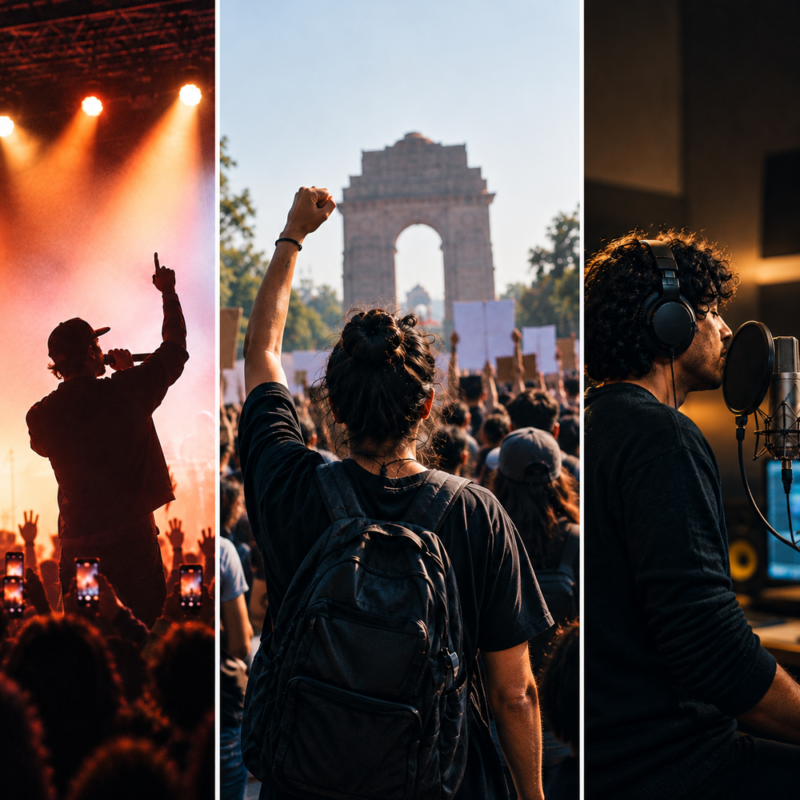
Mumbai, 12th October 2026: India’s continued student protests in 2026 revealed an unexpected side of the country’s evolving music economy. At Delhi’s Jantar Mantar, songs became expressions of solidarity, independent rappers found new audiences, established artists entered public conversations, and social media transformed everyday protest footage into music-discovery opportunities. The movement which raised questions about the NEET examination controversy and accountability in education, demonstrated how quickly music could become part of a national conversation.
For the music industry, the significance extended beyond individual viral hits. The protests offered a real-world demonstration of how catalogue discovery, independent releases, short-form video, artist identity and audience participation can intersect. Here are eight moments from 2026 that offer important lessons for India’s music business.
‘Taare’ Demonstrates the Power of an Unplanned Hit
Released on 23 June 2026, ‘Taare’ by Farak, 10A and Saswat Balan found an unexpected audience when students began using it in videos documenting the CJP protests. Its themes of disappointment, resilience and familiarity with hardship resonated with the emotions surrounding the movement. More than 32,000 Reels had used the song by the time of its July coverage.
The industry lesson was clear: a song’s commercial and cultural life does not end at release. A track can find a second audience months or weeks later when its emotional meaning connects with a public event. For independent labels and artist managers, this reinforces the importance of monitoring how audiences use music organically, rather than evaluating a release only through its first-week streaming performance.
Vinod Waghade Shows How Quickly Independent Rap Can Respond
Nagpur-based rapper Vinod Waghade and his friend Amar Bagde recorded a protest rap titled ‘Jantar Mantar’ after following the developments around the student demonstrations. Waghade had spent years making socially conscious music, addressing subjects such as unemployment and other public concerns. The protests gave his work a new context and helped one of his tracks gain attention among demonstrators.
For the independent music ecosystem, this was an example of speed becoming a creative advantage. An artist without a large marketing budget can respond to a developing conversation, record a relevant song and distribute it digitally without waiting for a traditional campaign cycle. The opportunity is not to manufacture controversy, but to recognise when an artist’s existing voice and subject matter connect naturally with the public mood.
Existing Protest Music Finds New Distribution Channels
The demonstrations were not driven exclusively by newly released tracks. Older Hindi film songs, protest poetry and familiar anthems also found a place in the movement’s soundscape. The songs including ‘Khoon Chala’, ‘Sadda Haq’ and others were played from loudspeakers and circulated through videos recorded at the site.
This mattered for catalogue owners, music publishers and labels. A song that has been available for years can become relevant to a new generation through a cultural event and a fresh social media context. Catalogue marketing, therefore, is not limited to anniversaries, film nostalgia or planned influencer campaigns. It can also involve understanding where older recordings are being rediscovered, while ensuring that their use is properly tracked and rights are respected.
Protest Rap Becomes a Form of Immediate Commentary
The protests created space for rap to operate as a form of real-time commentary. Independent musicians used original lyrics to address student frustration, accountability and the wider atmosphere around the demonstrations. Original rap, music and poetry became part of the cultural expression surrounding the movement.
For the music industry, this illustrates rap’s capacity to translate complex feelings into short, memorable and shareable statements. Its conversational delivery can work especially well in short-form video, where a verse or hook becomes the central element of a post. Yet the opportunity requires editorial judgement: topical relevance can bring attention, but accuracy, authenticity and an artist’s long-term credibility matter more than chasing a temporary trend.
Hanumankind Turns Artist Visibility Into a Live Cultural Moment
On 20 July, rapper Hanumankind joined students and civil society groups at the demonstration in Delhi. Videos of him walking alongside protesters circulated widely, and he shared footage and comments about the events. His presence brought an established artist into a public conversation that was already receiving significant online attention.
The industry lesson concerns the relationship between artist identity and audience engagement. An artist’s public presence can create a moment that travels beyond music releases, interviews and concert announcements. However, meaningful participation cannot be reduced to a publicity tactic. Audiences are increasingly able to distinguish between a genuine public position and an appearance designed primarily to generate engagement.
The Protest Site Becomes A User-Generated Content Engine
The demonstrations also revealed how young audiences have integrated content creation into everyday cultural participation. A range of formats appeared around the protests, from dance videos and personal accounts to “Get Ready With Me” clips and footage of events on the ground.
For music marketers, this demonstrates the value of understanding the many ways audiences incorporate sound into their content. A track may be used as an emotional backdrop, a humorous contrast, a dance cue or a statement of solidarity. Each use creates a different route to discovery. Labels can learn from these behaviours by studying emerging formats and making music easier to discover and identify, without assuming that every viral post will automatically translate into streams or revenue.
Viral Creator Culture Expands Music’s Role Beyond Streaming
The protests also blurred the line between news, entertainment and creator culture. Memes, short videos, music-led posts and on-the-ground documentation attracted audiences who might not ordinarily follow a protest closely. The protest showcased how overlap between internet culture and street demonstrations, including how the online language of Gen Z became part of the movement itself.
The music-business implication is that digital discovery increasingly takes place outside conventional music channels. Creators can introduce a song to an audience through a meme or a personal story before listeners ever encounter the official music video. This creates opportunities for labels, distributors and independent artists to develop creator relationships, but it also calls for clearer attribution, licensing practices and measurement of how online attention translates into lasting fan engagement.
The Movement Highlights the Gap Between Virality and Sustainable Careers
The final lesson is perhaps the most important: a viral moment is not the same as a successful music career. The protests demonstrated how an independent track could find a new audience, how a socially conscious rapper could attract attention and how a public appearance could place an established artist at the centre of a conversation. But visibility alone does not guarantee repeat streams, ticket sales, commercial partnerships or long-term fan loyalty.
For labels and artist managers, the next step after a viral spike is to examine whether new listeners explore the artist’s wider catalogue, follow official profiles, save tracks, return to subsequent releases and attend live performances. Music distributors can help artists understand these patterns through platform analytics, while publishers and rights teams need to ensure that compositions and recordings are correctly identified and monetised where applicable.
What 2026 Means for the Future of Music Marketing
India’s 2026 protests offered a compelling case study in the changing mechanics of music discovery. A track can acquire a new meaning through a public event. A musician can respond to the moment without the backing of a major label. A familiar recording can find renewed relevance among younger listeners. And a creator’s video can introduce a song to people who were never actively searching for it.
For the music industry, the opportunity lies in listening to audiences as closely as it promotes releases. Algorithms can amplify a moment, but cultural relevance begins with people choosing to use, share and identify with a song. The labels and artists best placed to learn from these events will be those that treat virality as a possible starting point, not a guaranteed outcome, and build systems that turn discovery into deeper listening and enduring relationships.
