
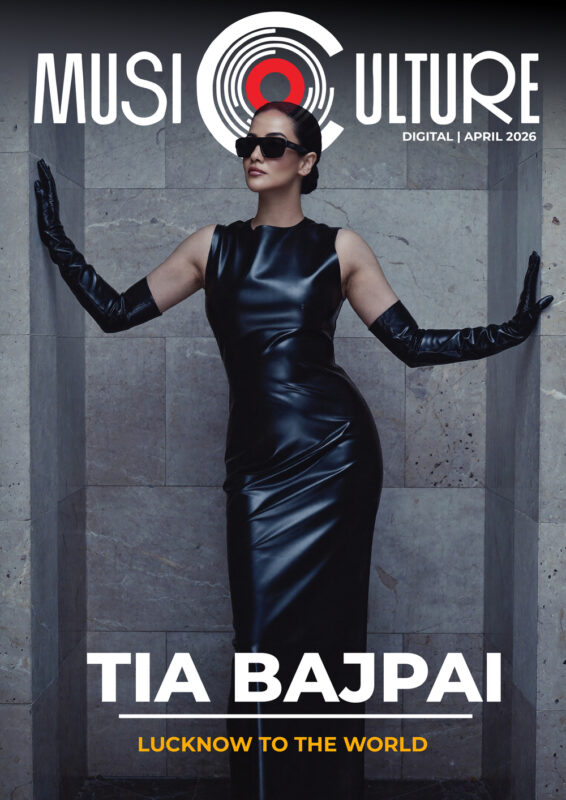
Apr
Digital Cover
April 2026 | “I Want My Art to Speak Globally”: Tia Bajpai on Music, Movies & Reinvention
In an era where artists are constantly redefining boundaries, Tia Bajpai stands out with a fearless approach to music and storytelling. From her early days on reality television to building a multifaceted career across films and independent music, her journey has been anything but conventional. Now, with a bold multilingual album and a renewed global vision, she is embracing evolution like never before. In this exclusive MusiCulture April Digital Cover interaction, Tia opens up about her creative risks, disciplined upbringing, and the relentless pursuit of artistic growth in an ever-changing industry landscape.
Your new album spans multiple languages including Hindi, English, Korean, Latin and even Swahili. What inspired this global approach?
The idea was very clear, we wanted to create something that hasn’t been done before. I’ve already worked in Hindi and English, but I wanted to push boundaries and make something truly global. Since the album leans into Afro house and Afro techno, Swahili felt like a natural fit because it’s earthy and deeply connected to that sound.
Adding Korean and Latin was about expanding reach and making the music more interesting. If a Korean hook can connect with audiences there, why not? It’s about creating music that travels.
Singing in multiple languages isn’t easy. How long did it take you to adapt?
It took us about 8–10 months to complete the album, and a big part of that time went into understanding the languages. Latin was the most challenging because it’s not something we use in daily life.
I’m still learning. I can sing it because I’ve practiced the lyrics, but fluency takes time. That’s the beauty of learning, you realize there’s always more to explore.
Stream ‘Love Mafia’ album here:
You began your journey with Sa Re Ga Ma Pa in 2005. How do you reflect on your 20+ year journey?
It’s been beautiful and unpredictable. I had one dream, to come to Mumbai and be on that stage. I was in 10th standard when I participated, and since then, there’s been no looking back.
Music was always my calling. Acting just happened along the way, it was my destiny, it chose me. But overall, I feel grateful. No regrets, only learning.
With extensive training in Hindustani classical music, how do you balance tradition with modern sounds?
Training gives you a strong foundation, it sharpens your instincts. But as an artist, you have to evolve. You can’t stay stuck in one format, especially if you want to reach a global audience.
Indian classical and Western music are very different, and not everyone understands both. That’s why genres like Afro house excite me, they allow you to blend soul and pop, tradition and modernity.
Watch the full interaction here:
What has been key to your artistic evolution?
Understanding myself, my strengths and weaknesses. I know my strength lies in my vocals. I can sing Indian classical as well as Western styles, and that versatility helps.
At the same time, I constantly work on improving my weaker areas. Growth happens when you balance both.
Tell us about your collaboration with producer Prince.
Working with Prince has been incredible. He’s collaborated with global names like Swedish House Mafia and RedOne, so his exposure is massive.
We constantly challenge each other. His philosophy is simple, if you’re in the top league, you cannot afford to be mediocre. That mindset pushes me to give my absolute best every single time.

Between acting and singing, where do you find more fulfilment?
Music is where I’ve invested the most, years of training and discipline. Acting, on the other hand, was destiny.
Films like Haunted 3D and 1920: Evil Returns happened organically. Horror as a genre is very close to me, and I’ve been selective because I want to maintain a certain standard.
Watch ‘Uska Hi Banana’ from 1920 Evil Returns here:
You’re returning to horror with “Lily Rose.” What can audiences expect?
Yes, Lily Rose marks my return to horror after a long time, and it’s an international project. The script is strong, which is why I said yes.
Apart from that, I’m also working on another film currently being shot across Europe.
How have your roots shaped your journey?
I come from Lucknow, and discipline has been a huge part of my upbringing. My parents are musicians, so riyaaz was non-negotiable.
Life was simple, school, music training, studies, repeat. That structure built the foundation for everything I am today.
What keeps you going in such a competitive industry?
Perseverance. I know what I want, and I’m not distracted. I’m a singer and an actor, that’s it. Also, I don’t believe in labels like A-list or B-list. Art is art. If people connect with you, that’s what matters.
What’s next for you in 2026?
Right now, it’s all about filming, touring, and promoting my album Love Mafia. Along with that, I’m working on Lily Rose and another film.
It’s a packed year, but I’m excited.
How do you approach live performances?
It completely depends on the audience. A college crowd is different from a wedding audience.
I prepare setlists, accordingly, rehearse with my band, and then adapt on stage. For me, it’s all about making sure the audience enjoys and remembers the experience.
As she continues to push creative boundaries and explore uncharted territories, Tia Bajpai remains rooted in discipline, passion, and an unwavering belief in her craft. Whether it’s experimenting with global sounds, returning to cinema, or captivating audiences on stage, her journey reflects a rare balance of ambition and authenticity. With an exciting slate of projects and a clear artistic vision, Tia is not just evolving, she’s setting her own pace in the industry. If this conversation is any indication, the next chapter promises to be even more dynamic, daring, and deeply resonant.
Article by Vishwa Deepak Dikshit
Photo Credit to Tia Bajpai and her team
