

Jan
Prime Feature
World Braille Day 2026: When Sound Becomes the Strongest Emotional Connector
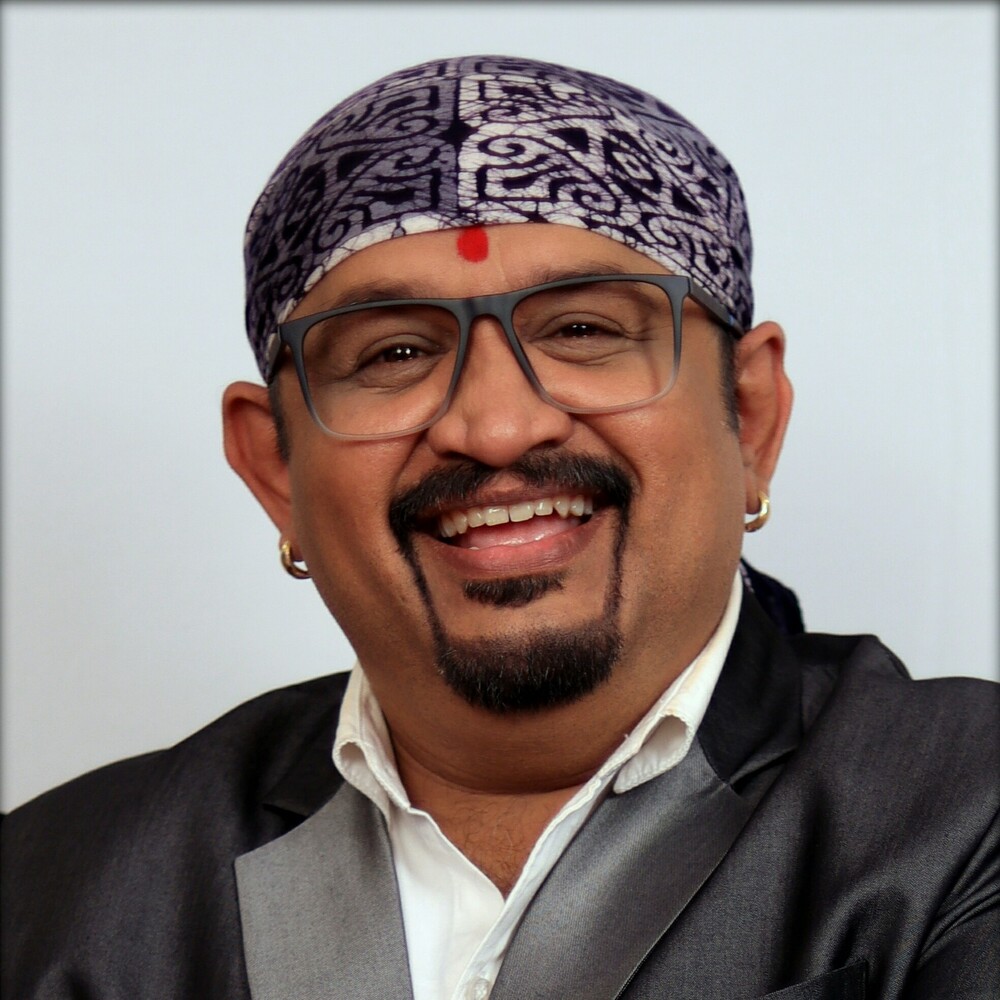
By Abhijeet Ghoshal, Versatile Bollywood Singer & Performer
Mumbai, 4th January 2026: Music, at its core, was never meant to be seen. It was meant to be felt. Long before stages, lights, or screens existed, sound travelled through breath, rhythm, and silence. In today’s visually crowded world, we often forget this truth. Yet for millions of people who do not see with their physical eyes, sound remains the most honest and powerful emotional connector.
On World Braille Day, I find myself reflecting deeply on sound, silence, and vision—not just what we see with our eyes, but what we truly perceive.
I had the privilege of working closely with the late Indian music composer and lyricist Ravindra Jain ji, fondly called Dadu by all of us. Best known for timeless works like Ram Teri Ganga Maili and Chitchor, Dadu was born visually impaired yet rose to extraordinary success. He was a university of music, singing, lyrics, literature, and multi-languages—a thinker par excellence. He became deeply respected for his musical genius, spiritual depth, and quiet resilience.
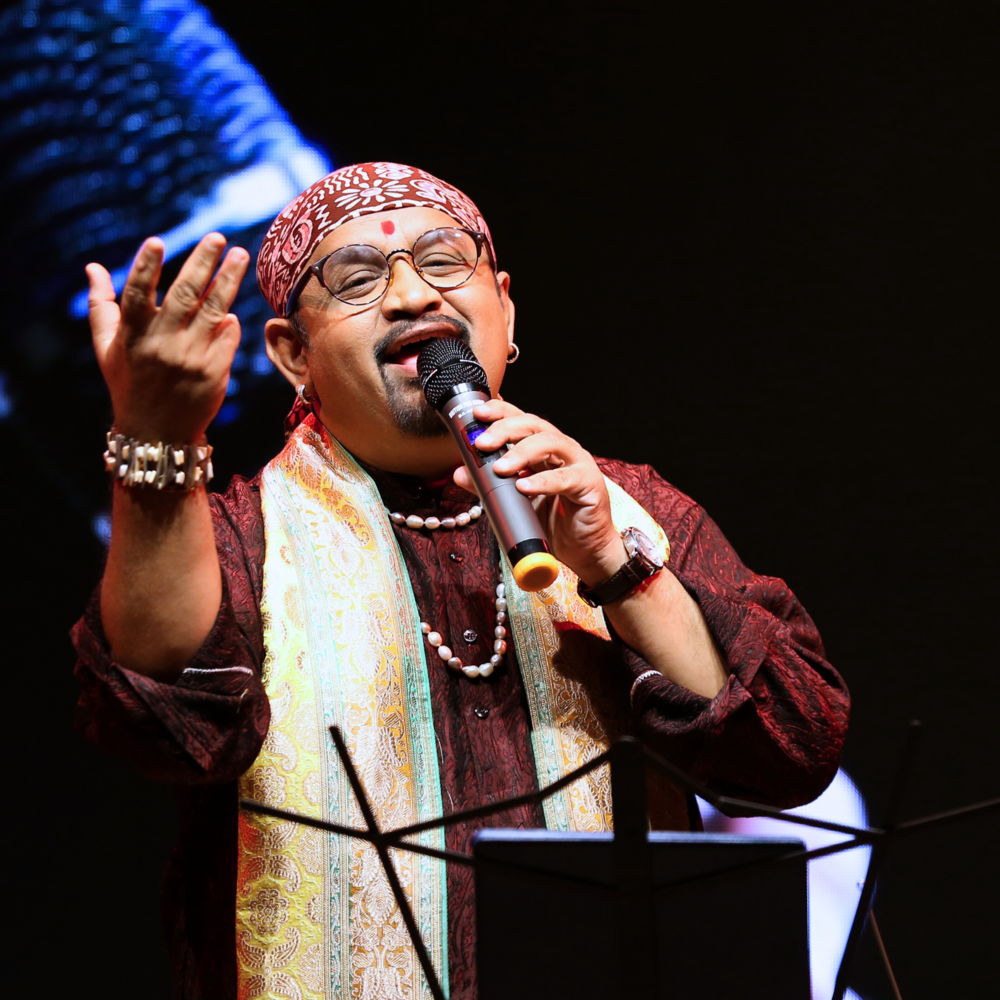
We recorded many songs together and spent long hours discussing music, scriptures, and life. Over time, one thought stayed with me strongly: God did not give Dadu physical eyesight but instead gifted him extraordinary inner vision. There is a difference between eyesight and insight. Dadu had a depth of perception that most of us, despite having eyes, may never attain.
His work is not limited to one generation. It continues to live, guide, and inspire even today. That alone is proof of true vision.
I remember one incident very clearly. Once, at 2:30 in the night, Dadu called me to discuss Mahalaya, a Bengali musical narration based on the Shri Durga Saptashati. Even today, I am one of the very few performing Mahalaya live across the country with my students and my small musical family. That night, Dadu wanted to discuss the spiritual and musical depth of Mahalaya. The next morning, around 7:30, I reached his house. What I witnessed there still humbles me.
At the time, he was working on Sanskrit scriptures, translating the Bhagvad Gita into Hindi and the Quran from Arabic into Urdu. On one side, Suresh Tiwari ji, a celebrated lyricist, was reading Sanskrit shlokas aloud, which Dadu absorbed silently and then rendered into rhythmic Hindi. On the other side, a Maulana sahib recited verses from the Quran in Arabic, and Dadu dictated their Urdu meaning. His mind functioned with extraordinary clarity and discipline.
I often feel that if God had given him normal eyesight, perhaps this level of focus and inner stillness would not have been possible.
Around 2011, while discussing Mahalaya, he suddenly asked me, “Abhijeet, can you see the picture of Maa Durga?” I said yes. He asked, “Tell me, what weapons does she hold?”
I named them one by one and finally said, “Dadu, that is all.” Instantly, he replied, “No. Where is the tenth one?”
He was writing, dictating, and thinking at the same time, yet he knew something was missing. I looked carefully and noticed a shield, partially hidden, used by Maa Durga to push the demon’s head away. When I told him, he smiled quietly. That was not eyesight. That was vision.
For people without physical sight, sound becomes a bridge to emotion, imagination, and truth.
I see this even today. A close friend of mine, Sarfaraz, is one of India’s finest keyboard players and is completely blind. The way he composes music is instinctive and deeply emotional. As early as 2008, he was using speech to text technology on basic mobile phones, long before most of us understood such tools.
When physical eyes are absent, other senses sharpen. Awareness deepens. Listening becomes richer. Dadu could recognise me the moment I entered the room without even hearing my voice. He would lift his head and say, “Aree Abhijeet Babu, eshe gechho?” This was always his welcome statement in Bengali, and it filled you with warmth and belonging.
We believe we have vision. In reality, many of us only have sight.
Many of my closest friends cannot see with their physical eyes. I have worked regularly with a visually impaired band called Udaan. They are not helpless. It is often our limited thinking that makes us believe they are.
This World Braille Day, I feel gratitude more than sympathy. Gratitude for life, for such people, and for the lessons they quietly teach us. Growth begins with compassion, but wisdom comes when we stop feeling sorry and start learning.
Think of Louis Braille, whose work transformed access to knowledge. Think of Graham Bell, who could not hear, yet created a device that allowed the world to connect through sound. History reminds us that limitation often gives birth to deeper vision.
As a musician, I believe sound is not just art. It is empathy. It carries memory, faith, struggle, and healing. When vision is absent, sound does not weaken. It becomes deeper and more intimate. In music, culture, and life, perhaps the real question is not what we see, but how deeply we listen.
Disclaimer:
The views and opinions expressed in this authored article are solely those of the author and do not necessarily reflect the views, policies, or positions of the publication, its editorial team, or its management. The publication does not assume responsibility for the accuracy of the information presented and is not liable for any errors or omissions.
