
Nov
Be My Guest
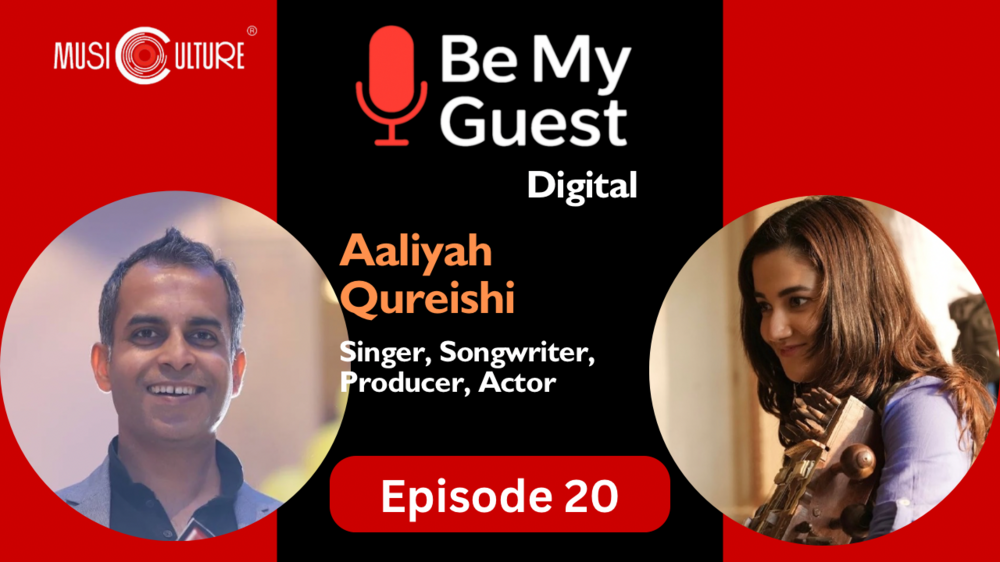
Aaliyah Qureishi: “A Love Letter to My Inner Child” | Where the Wild Things Go | Be My Guest
Mumbai, 22nd November 2026: Actor, singer and now self-producer, Aaliyah Qureishi talks to MusiCulture about her concept album Where the Wild Things Go, sampling Alan Watts, life after Jawan, and why she wants nothing to do with streaming data.
Where the Wild Things Go
Seven songs into an eleven-track rollout, Aaliyah Qureishi’s Where the Wild Things Go is already showing what kind of record it is. It isn’t chasing the algorithm. It’s an unhurried concept album that sets Eastern philosophy inside pop melodies, folds in Indian classical textures, and asks a question most pop records avoid: what happens when you stop performing and simply become yourself again?
The album began with a feeling that people have lost touch with the wild, both the forests and open spaces we rarely get to anymore and the instinctive self inside us. For Qureishi, making it became a way of reconnecting with the reason she wanted to be an artist in the first place. She set out to make a record her 13-year-old self would have played on repeat.
“So it came as kind of a love letter to my inner child, I would say.”
A Rare Feature Credit: Alan Watts
The album’s biggest talking point so far is “Blue Bodies,” a meditation on death and rebirth that opens with the voice of the late philosopher Alan Watts. When Qureishi first played the album to a listener, the song’s subject didn’t come through. It arrives right after a run of love and self-love songs. She needed a way to bring up mortality six minutes into a concept album without breaking its flow, and Watts, whose talks she had loved since childhood, was the answer.
Watch the full interaction here:
Redefining Success
Qureishi is candid about burning out on an industry that kept asking her to become someone else. She says that pop culture keeps pushing hyper-consumerism and the idea of “the body being the brand,” and that she spent years reshaping herself because she thought it would improve her chances.
“You can hit all the milestones you dreamed of hitting, but if you’re doing it from a place that feels hollow inside, it’s not going to bring you any joy.”
She divides her career into before and after Jawan. The film gave her a first real taste of success and led to more roles, but the projects that followed also showed her which stories she didn’t want to tell. She doesn’t think of acting and music as separate. To her, both are part of a gradual move back towards authenticity, and that includes being willing to turn down roles she once would have accepted without thinking.
Her measure of success has changed from numbers to meaning.
“Someone coming and telling me that this song helped them through a breakup, or helped them through the death of a loved one, is much more meaningful. That brings me a lot more joy than seeing 10k more followers on Instagram.”
Art, Data and AI
Ask her whether she’d let streaming data shape her creative choices and the answer comes fast: no part of her wants that, and she’d rather hire people to handle it. She points to Björk’s idea that if you make something for a hundred people, maybe nobody will like it, but if you make it for yourself, a hundred people might. That leads her to artificial intelligence.
“The fundamental essential thing to have for an artist is to have a point of view. And AI doesn’t have a point of view. It just has infinite recall.”
She adds a sharper warning: the more people train their brains to think like machines, the more of their humanity they suppress. In her view, AI will only overtake human creativity if humans start thinking worse than AI.
Finding The Sound
The sound of Where the Wild Things Go is gentle and spacious, closer to a calm breath than a dancefloor. It draws on everything Qureishi grew up with: Lady Gaga and Lana Del Rey, Queen, The Beatles and Fleetwood Mac, Ella Fitzgerald and Billie Holiday, the ghazals her mother used to play with tabla running through them, and the long, quirky interludes of ’90s and 2000s Bollywood songs. Working on Bandish Bandits gave her a love of Indian classical music, and hearing sarod and other classical instruments live at a festival in Rajasthan pushed her further in that direction. She produced the album herself.
“I wanted to make something that would do the opposite of overstimulation, that would calm the nervous system and make you feel grounded and centred.”
What’s Next
The title track, which Qureishi wrote for herself in 2021 during the pandemic and never planned to release, comes out next. She says the first seven songs ask questions about who she is, about her career and about what real love is, and the last four begin to answer them, moving towards certainty, stability and peace. She calls the past year intense: she made eleven videos on a budget meant for three and grew more confident as a songwriter along the way. In 2027 she plans to tour the album, wherever cities will have her.
